
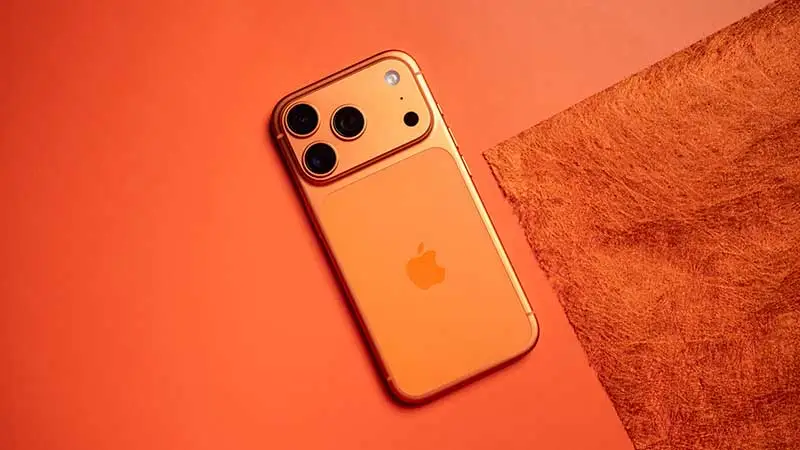

In the last two decades, the birth rate or reproductive rate (Fertility Rate) around the world has been known to be due to various economic and social reasons, but researchers have found an indirect effect of ‘iPhone’, one of the integral companions of modern life, behind this. According to a special report of the international media “Global News”, the first arrival of Apple’s iPhone in the market in 2007 coincides strangely with the downward graph of the birth rate in other developed regions of the world, including the United States.


This perfect and incredible coincidence of time has prompted Caitlin Meyers, an economist at ‘Middlebury College’ in Vermont, USA, to investigate whether there is a scientific connection between the introduction of the iPhone and the decline in the global birth rate.
The birth rate fell by 25 percent in a decade
Researcher Caitlin Meyers said about the current demographic crisis, “Why is the birth rate falling so fast around the world? This is the most important question of the current century. The birth rate in the United States alone has decreased by about one-quarter, or 25 percent, since 2007.”
Meyers’ research mainly examines whether screen time (screen time) or the time spent on phone screens has increased at an abnormal rate and people’s excessive dependence on digital communication is reducing real-life face-to-face or physical contact. Which has indirectly become the main psychological cause of reduced number of pregnancies or birth rate.
Here’s how the iPhone vs. birthrate experiment went
In order to test this novel idea, Meyers analyzed the birth rate statistics of different counties or regions of the United States in the early years (2007 to 2010) when the iPhone came to market.
At that time the iPhone device was exclusively available through the AT&T mobile network. Which means, some parts of the US had facilities or towers to use the iPhone at the time, while some remote areas didn’t.
When he compared areas with iPhones and areas without iPhones, controlling for other factors such as consumer income, education and local birth control policies, startling data emerged. It found that in areas where iPhone availability and usage was high, the birth rate fell at a much faster rate than the rest of the region.
Researcher Meyers explains this theory very simply: “We observed that in places where the iPhone quickly reached the general public, the birth rate dropped relatively quickly. The theory is quite simple—the more time people spend online, the less opportunity they have to spend intimate time with each other in real life. When you’re not spending time with someone physically or face-to-face, it’s natural that you’re less likely to conceive.”
Global picture: Many countries below population stabilization rate
Currently, in most of the developed and developing countries of the world, the birth rate has fallen far below the minimum rate to keep the population stable (Replacement Rate, which is 2.1 children per woman).
United States: Currently the rate is about 1.6 children per woman.
Canada: The figure is even more alarming in Canada, where the rate is only around 1.25.
This downward graph of the fertility rate is not limited to rich or western countries, Asia and Latin American countries are also recording this ‘Baby Bust’ or a sudden decline in the birth rate.
Is the smartphone the only reason? Experts disagree
Despite all this, sociologists and demographers warn that smartphones or iPhones are not the only or main reason for this situation. During the 2000s, several major social and macroeconomic changes took place around the world, which contributed to the decline in birth rates. These include the global economic recession of 2008, skyrocketing housing and living costs, increasing female higher education rates, and the availability of modern birth control.
Celia Chandler, a well-known author who has worked on the experience of being childfree (Childfree by choice), thinks that drawing a direct correlation between technology and the decision to not have children is a bit of an exaggeration. He said:
“Claims that technology is keeping people away from having children seem a bit exaggerated to me. The most important positive change in recent decades is—people today, especially women, are more free and empowered than ever before to decide whether to be a mother or a father. I feel very lucky to have been born in a time when I had complete freedom to make my own life decisions.”
Share this news as a Photo Card
Generating high-quality image, please wait…


